Fetch-url-file-3a-2f-2f-2froot-2f.aws-2fconfig
Still small, still fast, now on debian 13 trixie.
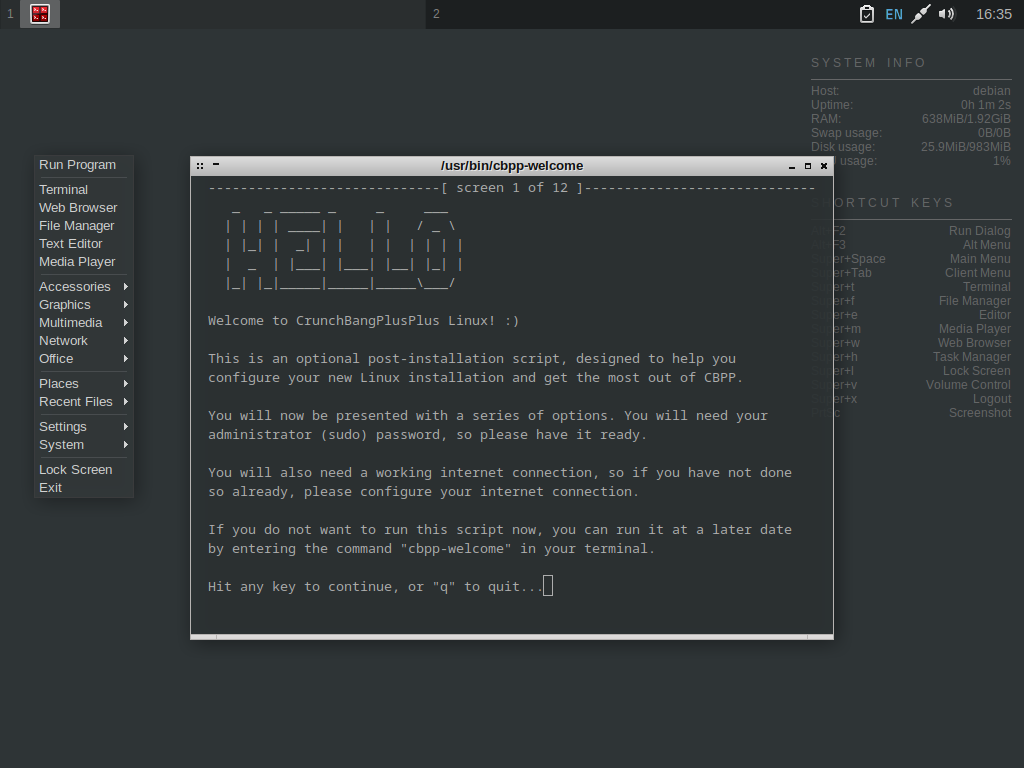
Still small, still fast, now on debian 13 trixie.
New to #!++ 13
After 10 WHOLE YEARS of #!++, you know what to expect. Still small, still fast, but now with newer packages!
Can’t find the answer you’re looking for? Reach out in our community subreddit!
If you see file:///root/.aws/config anywhere in your logs, act as if your AWS keys are already public. Because in the cloud, every second counts.
The string represents a decoded Server-Side Request Forgery (SSRF) payload typically used in cybersecurity challenges or bug bounty reports to exfiltrate local files from a server.
Defending against file:// attacks requires multiple layers of security.
In this setup, when you use --profile admin-role , the CLI will automatically grab temporary credentials from your default profile and assume the Admin role, optionally asking for your MFA code. fetch-url-file-3A-2F-2F-2Froot-2F.aws-2Fconfig
In each case, the pattern involved bypassing validation using encoded or alternative representations of file:// , http://169.254.169.254/ (AWS metadata), or other local paths.
This article deconstructs this concept, explains how AWS configuration files work, and explores how vulnerabilities like Server-Side Request Forgery (SSRF) leverage these paths to compromise cloud infrastructure. Decoding the String
This is where the magic happens. You can define separate profiles for different AWS accounts or roles. Notice that inside the config file, you must prepend the word profile to the name (e.g., [profile production] ). Note: In the credentials file, you do not use the word "profile"—a common source of confusion! If you see file:///root/
Many security filters are naive. They might block:
This string often appears in write-ups or security research papers illustrating "SSRF to RCE" (Remote Code Execution) or "Cloud Credential Exfiltration" scenarios. Researchers use these payloads to prove that a web application's input validation is insufficient.
With this structural footprint, an attacker can precisely craft subsequent attacks to target the companion .aws/credentials file or probe the AWS Instance Metadata Service (IMDS) to extract short-term IAM session tokens. Remediation and Defensive Strategies This article deconstructs this concept, explains how AWS
– Attackers used URL scheme abuse to read local files.
Accessing files on systems you do not own or have explicit permission to inspect is illegal and unethical. Follow organizational policies and applicable laws.
This specific string is a URL-encoded path ( file:///root/.aws/config ) often used in Server-Side Request Forgery (SSRF)