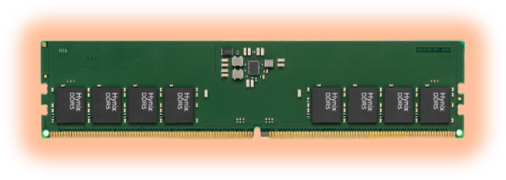
Buy SK hynix SDRAM Modules

If you are an independent researcher, or if your country does not qualify for Hinari, you can still find millions of high-quality peer-reviewed medical articles for free. The open-access movement has made massive strides in recent years. Use these legal, high-utility platforms:
Healthcare professionals can stay updated on the latest clinical guidelines, treatments, and best practices, directly impacting patient care positively.
– HINARI does not offer individual registration to the general public. Instead, eligible institutions (national universities, research institutes, teaching hospitals, government offices, national medical libraries, etc.) apply for access. Once accepted, each institution receives a unique set of credentials that it then distributes to its members – usually through the library or IT department. From a user’s perspective, receiving those credentials from your institution is the legitimate way to “unlock” the resource.
Access to up-to-date scientific research is a critical asset for medical professionals, researchers, and students worldwide. The Hinari Access to Research in Health Programme, managed by the World Health Organization (WHO), stands as one of the world's largest collections of biomedical and health literature. Because subscription fees for these journals are traditionally expensive, many users search for shortcuts, frequently querying terms like "Hinari password free access." Hinari password free access
A large portfolio of peer-reviewed, open-access journals spanning all areas of biology, medicine, and health.
If your country or institution does not qualify for Hinari, you do not need to rely on illegal credential sharing. There is a massive, legally compliant ecosystem of open-access scientific literature available to everyone globally:
The programme enables qualifying non-profit institutions in low- and middle-income countries to gain online access to one of the world’s largest collections of biomedical and health literature resources, either free of charge or with highly affordable subscriptions. Today, Hinari provides access to up to 21,000 journals, 69,000 e-books, and 115 other information resources, spanning 30 different languages and covering the full spectrum of medicine, healthcare, and related social sciences. If you are an independent researcher, or if
No. Hinari uses institutional credentials—one username and password assigned to your entire organization. Your librarian or programme coordinator can provide you with these credentials.
The proxy server routes the user's traffic through the institution’s registered IP address.
The shift to password-free access by HINARI marks a significant step towards more equitable access to global health information. By removing barriers to access, HINARI not only supports the objectives of global health equity but also empowers individuals in low- and middle-income countries to contribute to and benefit from global health research and education. As the program continues to evolve, it will be essential to address the challenges associated with sustainability, digital literacy, and infrastructure to ensure that HINARI's resources are accessible and beneficial to all who need them. – HINARI does not offer individual registration to
While Hinari has made significant strides in promoting equitable access to scientific information, challenges remain. These include awareness of the resource, internet connectivity issues in some regions, and the sustainability of the model.
If you are not yet eligible for full access, you can still benefit from HINARI’s . The programme offers extensive online courses that teach researchers how to access and use its resources effectively. Remarkably, “the majority of the training material can be completed without a User Name and Password”. These courses are an excellent starting point for researchers in developing countries who want to learn about HINARI before their institution completes the registration process.

SMARTsemi
39870 Eureka Dr.
Newark, CA 94560
TEL: 877-794-2749